The Mule In Me
Sometimes, despite being a hard worker, I reach a point where I simply refuse to budge. I call it my inner mule. Over the years, I've learned that getting myself moving again isn't about pushing harder. It's about paying attention, accepting where I am, and finding one small thing I actually want to do.

Photography by Dan Stensland
I consider myself a hard worker.
I will occasionally still work nights and weekends to meet a deadline. I once stayed up for 80 hours to get a job done on time. There was another time when I was really sick on the one day I had to start and finish a job in someone’s home, and instead of letting the client down, I just took vomit breaks throughout the day.
And yes, this could be a post about boundaries and work/life balance, but this is not that post.
This post is about my inner mule.
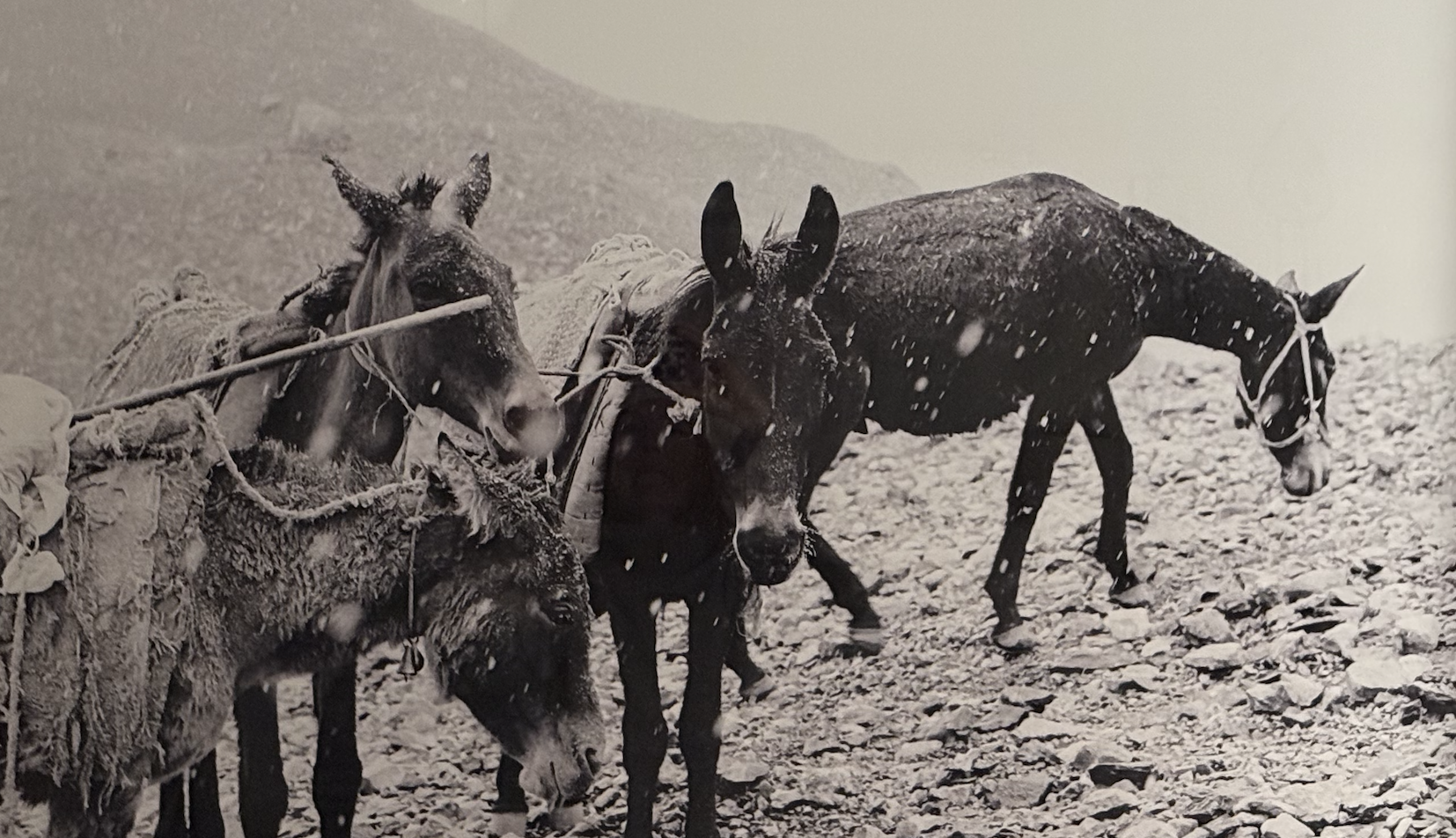
I grew up hearing that old adage “as stubborn as a mule.” In my head I conjured a visual of a mule sitting down in the middle of a road. Like a dog. But actually I think that might be donkeys. Mules are half donkey and half horse, so it’s plausible mules might also sit. Out of curiosity, I did a cursory search for information about donkeys sitting down, but I didn’t find any.
What I DID find was context around the idiom “stubborn as a mule.” According to Google’s A.I. generated response, mules are “not stubborn in the way humans usually mean. Mules often stop and refuse to move, which looks like stubbornness, but it is usually a self-preservation instinct rather that mindless obstinacy.”
It goes on to say that “unlike horses, which often panic and flee from perceived danger, mules inherit traits from donkeys and tend to freeze and assess. If a mule judges a path, load, or situation to be unsafe, it will refuse to budge.”
I don’t have any experience working with mules, so I can’t say whether this is actually true. I do however, have extensive experience working with horses, and this description is absolutely true.
It’s also interesting to me why mules might’ve gotten the reputation for being stubborn in the first place. Again, according to Google, “handlers expect immediate compliance from a horse, and so might view a mule's pause as defiance.”
All this additional information dovetails nicely with my inner mule.
Because there are times where I am just done.
I’M DONE.
I liken this “done-ness” to feeling like a mule (who looks like a donkey in my head). I can see myself sitting down in the middle of the road refusing to move. I mean this metaphorically and sometimes physically. I get to a place where I just don’t want to do anything.
Athough It doesn’t happen all that often, I am familiar enough with my mule that it’s appearance triggers a protocol of sorts.
It’s important to say what I don’t do anymore. I do not beat myself to get up and move, just like I wouldn't beat a mule. Here’s what I do now.
I Acknowledge my inner mule.
I don’t need to know why I’m sitting in the road at this point. In fact, knowing at this point is usually not helpful, because if I focus on knowing, then I focus on the solution, which completely bypasses this first crucial step, which is simply to notice where I am.
Next is Acceptance.
Accept all the emotions and the thoughts, regardless of how contradictory and ridiculous: the thought that I should want to move onto the next thing, that I, in fact, do want to do the next thing, and also that, in this moment, I am unwilling to move.
The value of accepting where I am is that it enables me to see where I am, so I can take steps to get to where I want to be. In this case, it’s not sitting in the middle of a road.
Once I sit with where I am, which for me can mean scrolling social media (my rainbows and unicorns feed), napping, browsing for whatever, or watching a show on Netflix while eating a huge bowl of popcorn, I’m able to give my mind some space. All these choices give my mind time to not think about next steps. By giving my mind time and space, it will start to come up with suggestions.
One of my mind’s go-to suggestions is doing one thing I want to do. Not need to do, have to do or should do.
Do one thing I Want to do.
And it's not big things. If it is, if the only solution or next action my mind can come up with is a vacation or a divorce, that’s more than my mule voice can solve.
It’s the small actions that get my mule up off of the road.
For example, I keep a fairly organized studio, but once or twice year it becomes overwhelmed by the remnants of jobs that are completed, new projects just getting started, and personal projects that have been neglected and need attention (like frog enclosure maintenance). All these things need various levels of organization or clean up, need to be archived, materials need to be purchased and replaced, work stations organized and reset. This process takes anywhere from a day or two up to a week or more.
The specifics of my road-sits vary, but the studio in disarray is always a part of it.
It’s a big overwhelming process.
Here’s how I deal with it.
First, the action that kick starts my will to start on the studio project doesn’t usually have anything to do with the studio.
It’s organizing my sock drawer.
Or buying new towels for my kitchen.
Or cleaning the front window in my living room.
They are such little things, such tiny tasks. Yet I know it will make me feel an outsized amount of better when it’s done. And towels? Towels delight me. I love new towels. And the window? The house could be a mess, clothes stacked on a chair needing to be folded, floors needing to be mopped, stuff needing to be dusted, but having at least one clear window makes all the other necessary things seem more manageable.
It’s the same with the studio. I will usually start with something that I have not had a chance to do but that I really, really want to do, but haven't been able to justify setting aside the time to do. Recently, it was cleaning and patching the base molding and then painting one wall a different color. It's been white for about five years and it's been increasingly bugging me when I walk into the studio.
Will anybody else notice? Probably not.
But that's OK because at the end of the day I have a lot more energy and I feel a lot calmer about going into work tomorrow and actually get started on the things I need to do. I’m able to move on to the next step.
I stop multi-tasking.
Instead of trying to get everything done at the same time, I set aside blocks of time without the expectation of getting any one thing done. I go in with the attitude that it will all get done, but not all at once, and not in any order.
I call this “putter time.”
Putter time is where I set aside a block of time to get stuff done, but I don't put a time stamp on anything. I don’t say “at 10 o’clock I need to start or finish a task”, or “at 2pm I will to stop what I’m doing to start something else.” I’m still following my to-do list, and, I’m keenly aware it’s more things than I have time in this block to complete. That’s also ok. It takes the pressure off in a way.
The important part of putter time is I give myself the luxury to pick and choose which things I will work on. And sometimes, I get side tracked: spending time on something that wasn’t on my to-do list. I’m ok with this because I always come back to the to-do list feeling more relaxed and motivated.
And within days, the list gets done. Or mostly done.
Done enough that I’m not sitting in the road anymore.
Which leads me back to something else Google said about mules: “Mules are widely recognized by animal handlers as intelligent and sensitive. They respond well to patience and clear communication rather than force.”
I didn’t know this but that feels like a beautiful way to think about my inner mule.